Home / Water heater replacement
Layton, UT · Tank water heaters
Water heater replacement in Layton.Gas and electric water heater installation, 40 and 50 gallon tanks, and code-ready swaps.
Water heater replacement in Layton is usually a like-for-like tank swap. Tell us the size, fuel, and age for a free quote.
- 40 gallon
- 50 gallon
- Gas
- Electric
- Power vent
Background: Photo: Mcloward, Wikimedia Commons, CC BY-SA 4.0.

Quick answer: Most water heater replacement in Layton is a 40 or 50 gallon gas tank swapped for the same type. A code-ready install adds earthquake straps in the upper and lower third,[1] a pan where required, relief valve piping, and an expansion tank when the system is closed. Size by first-hour rating.[2]
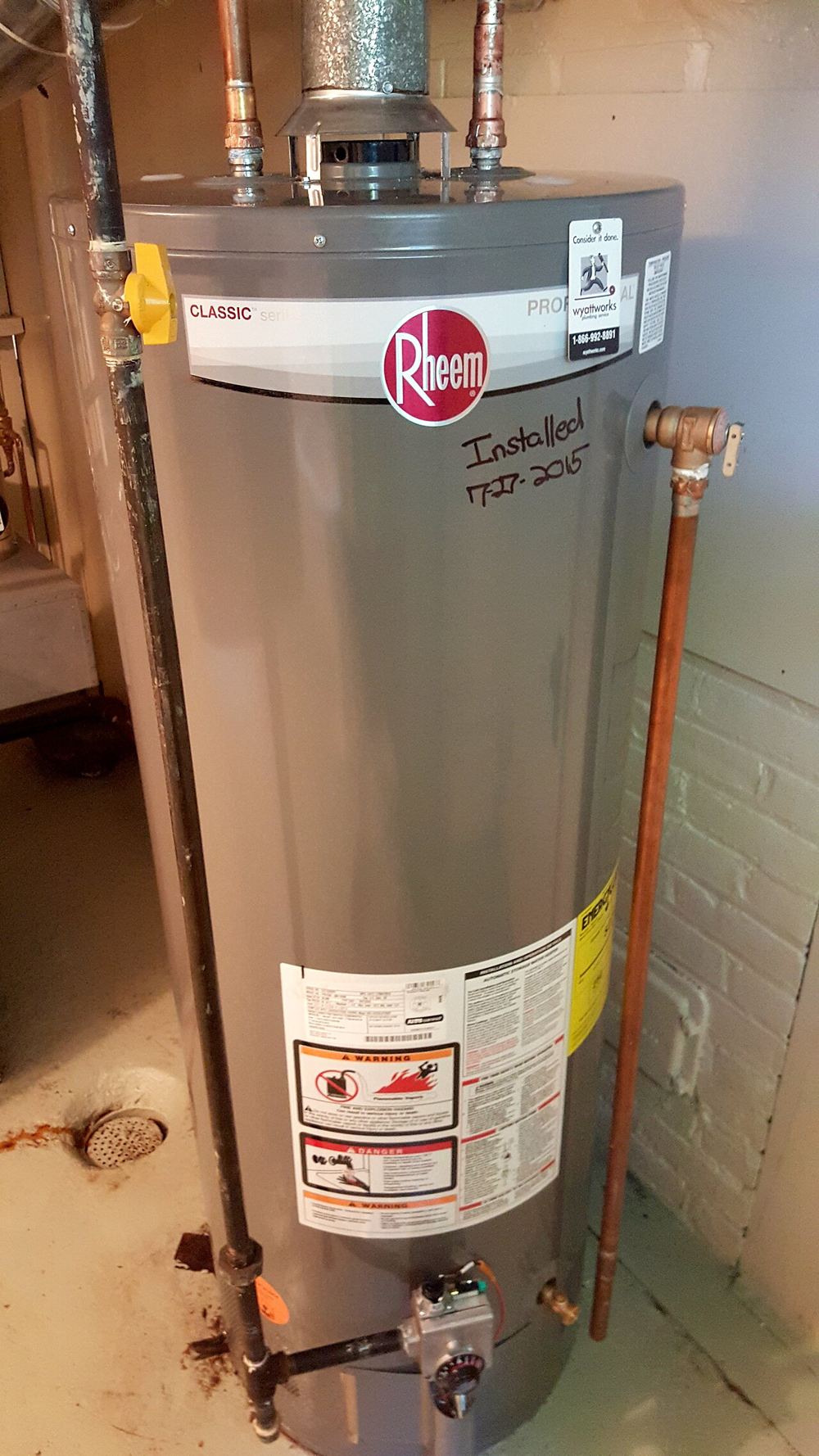

Water heater installation in Layton, start to finish.
A tank water heater stores hot water and keeps it hot. When it fails, it often fails with a leak. Water heater replacement is about getting the right tank in, strapped and vented, before that happens.
Most Layton homes heat with gas. About 85.2% of occupied homes use utility gas for space heat, so gas lines are usually near the water heater.[3] That makes a gas water heater replacement the most common job. An electric water heater replacement is common in condos, some townhomes, and homes without a gas vent.
Layton's housing is fairly new. About 36.7% of units were built in 2000 or later, and 19.5% in the 1990s.[3] Many of those homes are now on their second tank. Builder-grade tanks from the 2000s and 2010s are reaching the 10 to 15 year range federal guidance gives.[4]
Sizes and fuel
40 gallon, 50 gallon, gas or electric.
| Option | Often fits | What to check |
|---|---|---|
| 40 gallon gas water heater | Smaller households, one or two baths, light overlap | First-hour rating, vent type, gas valve altitude rating |
| 50 gallon gas water heater | Larger families, back-to-back showers, a big tub | Fits the closet, vent sizing, gas supply |
| 40 gallon electric water heater | Condos, smaller homes, no gas vent | Dedicated circuit, breaker, wire size |
| 50 gallon electric water heater | Bigger electric homes | Slower recovery than gas, circuit sizing |
| Power vent gas | No usable chimney or a side-wall vent | Outlet for the blower, vent run length |
| Heat pump (hybrid) electric | Unfinished basements with room and air | Space, condensate drain, noise[5] |
The U.S. Department of Energy says to size storage tanks by first-hour rating, the hot water delivered in an hour starting full.[2] Gallons alone do not tell the whole story.
Compare 40 vs 50 gallon water heaters or read gas vs electric.
Code items
What a code-ready Layton install includes.
Earthquake straps
Utah requires water heaters to be anchored or strapped against earthquake motion. The straps go in the upper third and lower third of the heater.[1] Old tanks with one loose strap, or none, get fixed on replacement.
Drain pan
Utah treats a water heater pan as an emergency receptor for the water heater only. It should not take discharge from other equipment.[1] A pan matters most where a leak would hit a finished ceiling or floor.
Relief valve piping
The T&P relief valve opens on too much heat or pressure. Its discharge pipe has to run where water can safely go. Utah's residential code chapter on water heaters covers those rules.[6]
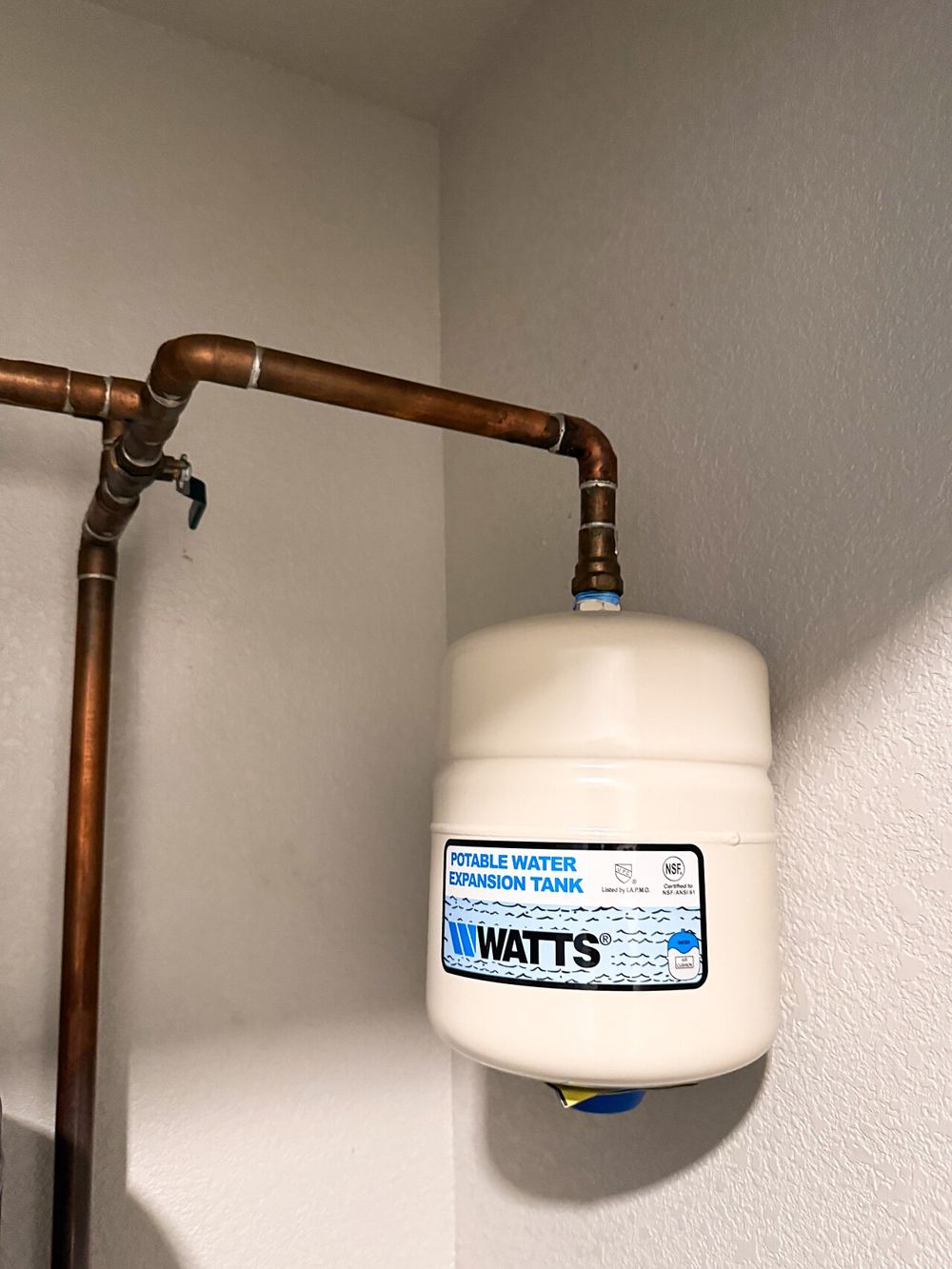
Expansion tank
Water grows as it heats. In a closed system, that pressure has nowhere to go. An expansion tank gives it room and takes stress off the relief valve.

Layton conditions
Hard water and altitude.
Layton's water is a blend of city wells and Weber Basin water, depending on the season and the part of town.[7] Weber Basin says its hardness can run 10 to 18 grains per gallon.[8] The USGS calls water above 180 mg/L very hard.[9]
That hardness settles in the tank as sediment. It makes noise, wastes gas, and wears the tank floor. A water softener and a yearly flush can help the new tank last. A.O. Smith's maintenance guide covers flushing and anode checks.[10]
Altitude is the other local factor. Layton sits about 4,459 feet up.[11] Gas water heaters have an altitude limit in the manual. One Reliance gas tank is approved up to 5,300 feet with no changes, and factory high-altitude models are offered above that.[12] The model's own rating is what to check.
Permits
Layton's Building Division takes permit applications and inspection requests through its online portal.[13] Ask whether the permit is in the quote and who books the inspection.
The job
How a Layton water heater replacement goes.
Check
Fuel, size, vent, gas line, circuit, space, and water pressure are looked at.
Quote
Like-for-like and upgrade options are priced, with code items and the permit listed.
Remove
Water and fuel are shut off. The old tank is drained and taken out.
Install
The new tank is set, strapped, piped, vented, and filled before it is fired.
Test
Leaks, draft, and temperature are checked. The old tank is hauled off.
FAQ
Water heater replacement in Layton: FAQ
How long does water heater replacement take in Layton?
Should I replace with a 40 gallon or 50 gallon water heater?
Do I need an expansion tank in Layton?
Are earthquake straps required on a new water heater?
Is a permit needed for a water heater replacement in Layton?
Can I switch from gas to electric, or electric to gas?
What happens to my old water heater?
Need a new water heater in Layton?
Send the size, fuel, and age. Get a free water heater replacement quote.
Get your free quoteKeep reading
Sources
- Utah Code 15A-3-305: Amendments to Chapter 5 of IPC (PDF)
- U.S. DOE Technology Fact Sheet: Water Heating (PDF)
- Census Reporter (ACS 2024 5-year): Layton city, UT
- PNNL / DOE Building America Solution Center: Gas-Fired Tankless Water Heaters
- ENERGY STAR: Heat Pump Water Heaters
- Utah Residential Code 2021, Chapter 28 Water Heaters (UpCodes)
- Layton City Public Works: 2025 Water Quality Report (PDF)
- Weber Basin Water Conservancy District: 2024 Consumer Confidence Report (PDF)
- U.S. Geological Survey: Hardness of Water
- A. O. Smith: Water Heater Maintenance Guide
- Wikipedia: Layton, Utah (elevation)
- Reliance gas water heater manual: High Altitude Installation (ManualsDump copy)
- Layton City: Building Division, Permits and Inspections
- Kaysville City: Building Permits