Home / Tankless water heater
Layton, UT · Tankless
Tankless water heater Layton, UT.Tankless water heater installation sized for winter water, hard water, and 4,459 feet.
A tankless water heater in Layton is sized by flow and temperature rise. Use the calculator, then send the form.
- Gas tankless
- Electric tankless
- Sizing
- Descaling
- Conversions
Background: Photo: Mcloward, Wikimedia Commons, CC BY-SA 4.0.

Quick answer: A tankless water heater in Layton, UT heats water as it flows, with no tank and no standby loss.[1] Size it for gallons per minute at your winter rise, since colder water lowers output.[2] Hard Weber Basin water means descaling.[3] Gas units often need a bigger gas line and new vent.[1]
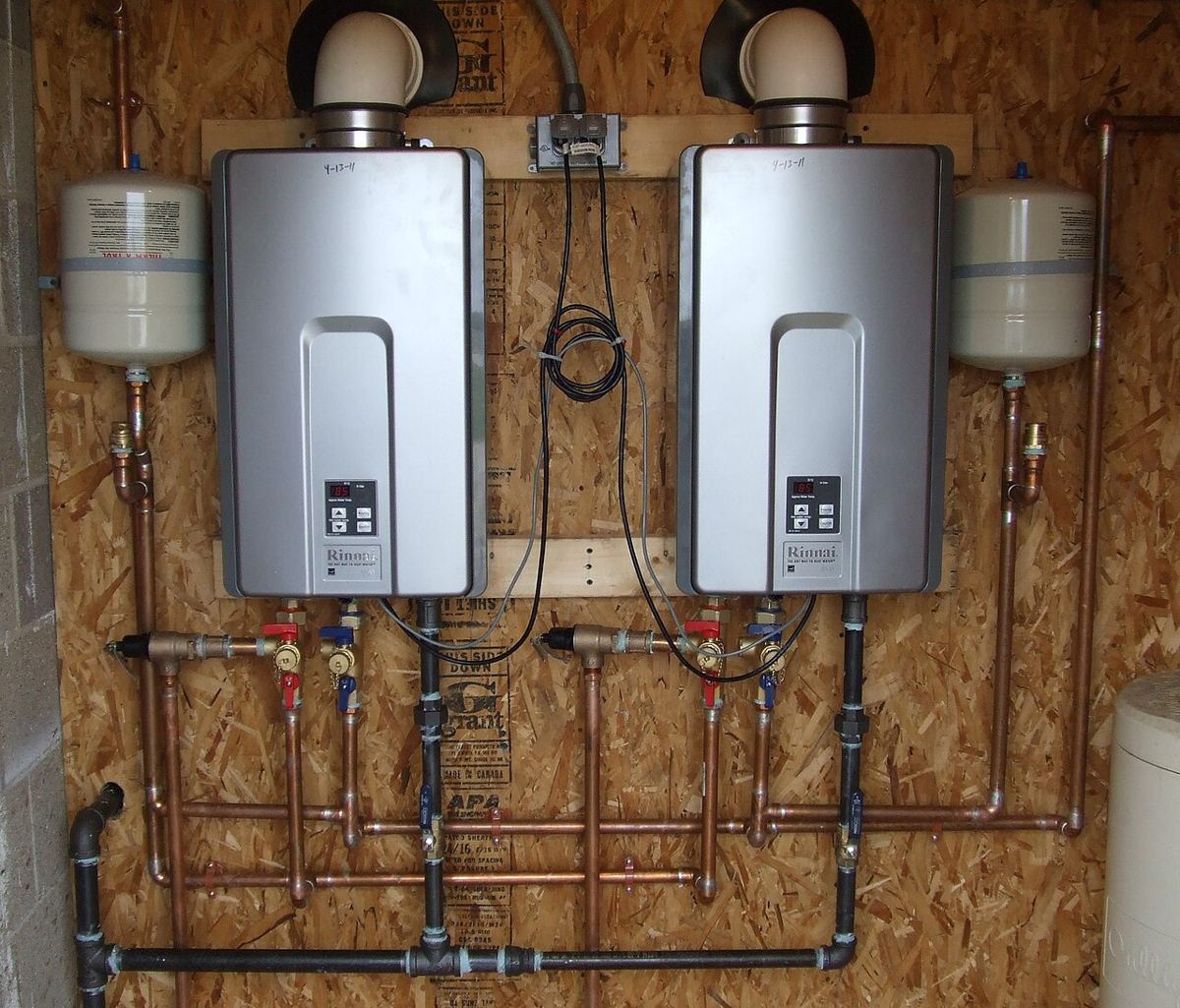

Tankless water heater installation in Layton.
A tankless water heater has no storage tank. A burner or element heats water only when a tap opens. That avoids the standby loss of a tank.[1]
The catch is sizing. A tankless unit makes a set flow at a set temperature rise. Run two showers and the dishwasher on a January morning, and an undersized unit falls behind. ENERGY STAR notes colder climates often need higher-capacity demand units.[2]
Layton adds two more factors. Water here is hard, and the city sits about 4,459 feet up.[3][4] Both affect the unit you pick and how you care for it.
Sizing calculator
Size a tankless unit for January.
Tick the fixtures that run at the same time. Set your winter incoming temperature and your hot water set point. The result is the flow and rise to look for on a spec sheet.
This is a sketch, not a design. The installer confirms the real numbers.
Tankless water heater sizing calculator
Illustrative only, using the DOE Building America method: add simultaneous fixture flow, then find the temperature rise (desired hot water minus incoming water).[5] Fixture flows are rough placeholders. Real fixtures vary. Incoming temperature is a slider you set, because this site does not publish a measured Layton tap-water temperature.
Selected total:
Colder incoming water means a bigger rise and lower gallons-per-minute output from the same unit. ENERGY STAR notes colder climates generally need higher-capacity demand water heaters.[2] Layton's water is a blend of city wells and Weber Basin water from the Weber River and nearby creeks. Size for January, not July.[6]
Get a sized quoteGas tankless
Gas line, venting, and condensate.
A gas tankless unit can need much more gas at full fire than the tank it replaces. DOE's tankless guideline covers gas pipe sizing, venting, and combustion air.[1] The meter and the line may both need a look.
Condensing units vent through plastic pipe and make acidic condensate. That needs a drain and often a neutralizer. Non-condensing units use special stainless vent.
At about 4,459 feet,[4] many gas units need an altitude setting from the manual. It is a setup step, not an afterthought.
Electric tankless
Whole-house electric tankless can need large dedicated circuits. Many homes need panel work first. Point-of-use electric units are smaller and can suit a far bathroom.
Hard water care
Descaling a tankless unit in Layton.
Weber Basin water, which Layton blends with city wells, can run 10 to 18 grains per gallon.[3][6] Scale builds in the heat exchanger. It cuts flow and can trip error codes.
Isolation valves let a tech flush the unit with a descaling solution. Many owners do it on a schedule. A softener or scale filter upstream helps.
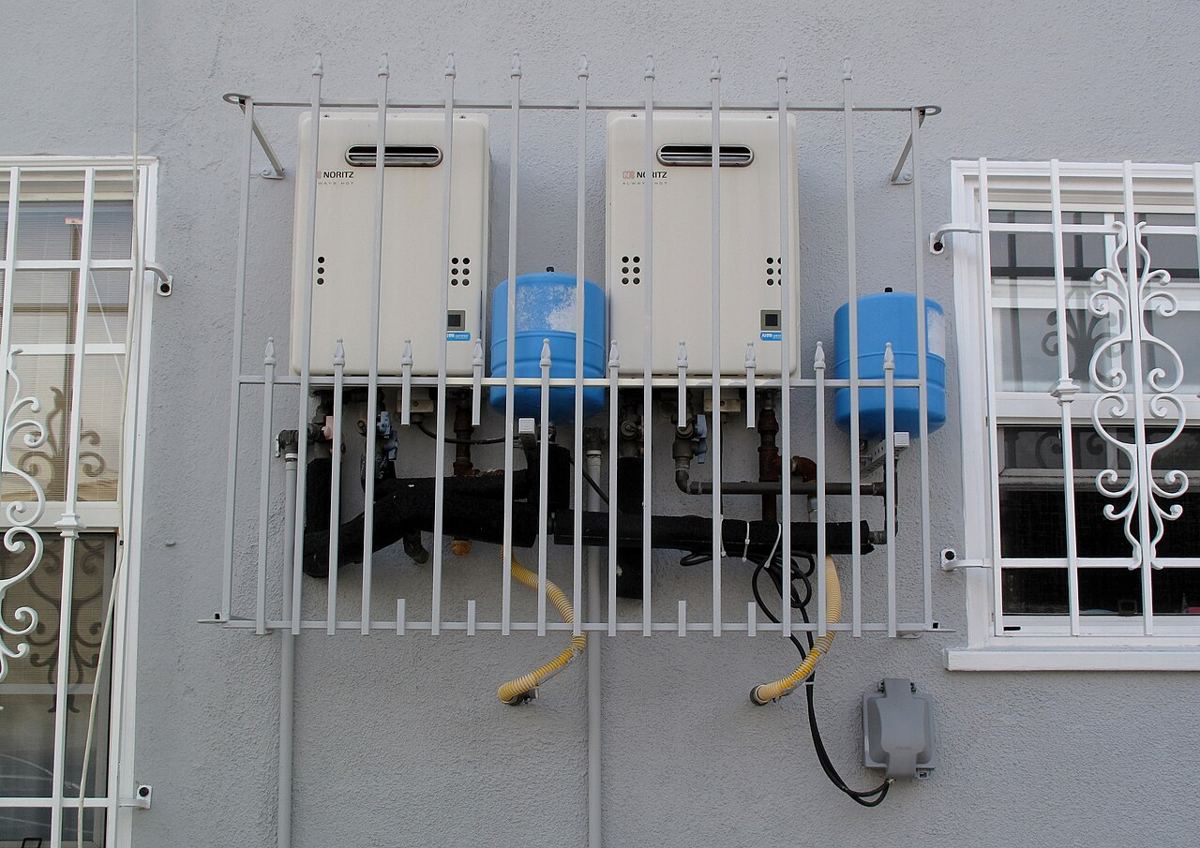

Tankless vs tank in Layton
A tank is simpler and cheaper up front. Tankless lasts longer, up to about 20 years,[1] and frees space. The tank vs tankless page has a fit quiz. The tankless conversion page covers switching.
Gas vs electric tankless water heaters.
| Gas tankless | Electric tankless | |
|---|---|---|
| Whole-house output | Higher flow at a big winter rise | Limited by the electrical service |
| Supply | Larger gas line, often[1] | Large dedicated circuits |
| Venting | Listed vent, condensate on condensing units | None |
| Altitude | Set from the manual at about 4,459 ft[4] | Not a factor |
| ENERGY STAR | Whole-home gas tankless models listed[7] | Check the model |
Most Layton homes have gas. About 85.2% of occupied homes heat with it,[8] so gas tankless is the common choice.
Where a tankless unit goes in a Layton home.
Most go on a basement or garage wall near the old tank. The vent needs a short, clear path outside. The unit needs a 120-volt outlet for its controls.
Garages get cold in a Utah winter. Ask about freeze protection in the manual before picking that spot.
Tankless care schedule
- Descale through the isolation valves on a schedule
- Clean the inlet screen
- Check the vent and condensate drain
- Watch for scale or flow error codes
Hard water is the reason. Weber Basin says hardness can run 10 to 18 grains per gallon.[3]
FAQ
Tankless water heater Layton UT: FAQ
What size tankless water heater do I need in Layton?
Do tankless water heaters work in cold Utah winters?
Does hard water hurt a tankless water heater?
How long does a tankless water heater last?
Will I need a bigger gas line for tankless?
Is a tankless water heater ENERGY STAR certified?
Does altitude affect a gas tankless unit?
Thinking about tankless in Layton?
Send your fixtures and fuel. Get a free tankless water heater quote.
Get your free quoteKeep reading
Sources
- U.S. DOE Building America: Measure Guideline, Transitioning to a Tankless Water Heater (PDF)
- ENERGY STAR Technical Bulletin: Demand Water Heaters (PDF)
- Weber Basin Water Conservancy District: 2024 Consumer Confidence Report (PDF)
- Wikipedia: Layton, Utah (elevation)
- PNNL / DOE Building America Solution Center: Gas-Fired Tankless Water Heaters
- Layton City Public Works: 2025 Water Quality Report (PDF)
- ENERGY STAR: Whole Home Tankless Gas Water Heaters
- Census Reporter (ACS 2024 5-year): Layton city, UT
- ENERGY STAR: Federal Tax Credits for Energy Efficiency