Home / Warning signs
Guide · Layton, UT
Signs your water heater is failing.Leaks, rust, noise, smell, lukewarm showers, and age.
Spot a failing water heater early and plan a water heater replacement before the leak.
- Leaks
- Rust
- Noise
- Age
Background: Photo: Mcloward, Wikimedia Commons, CC BY-SA 4.0.

Eight warning signs, and what they mean.
1. Water under the tank
With dry fittings, the tank body has likely failed. That means water heater replacement.
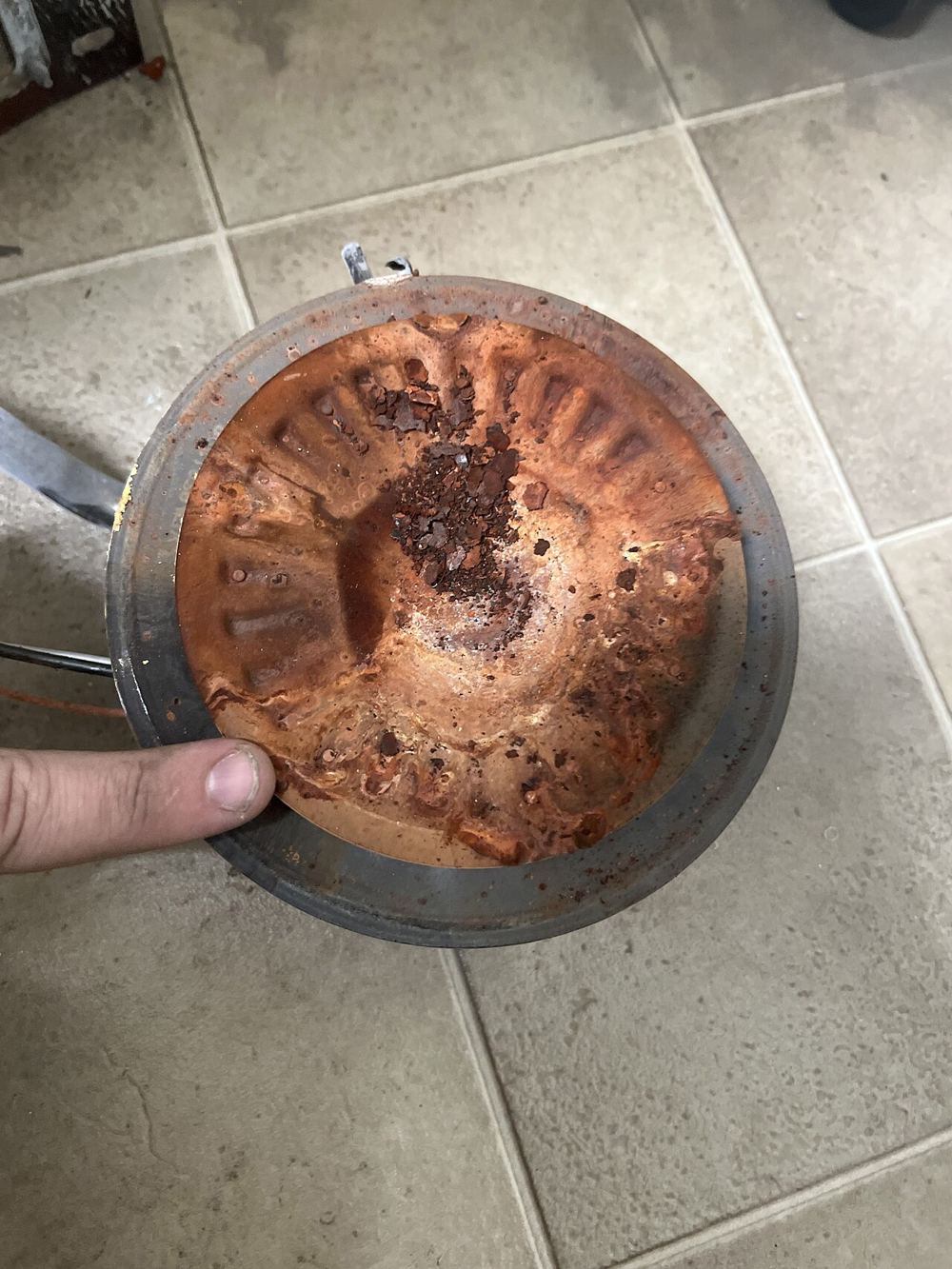
2. Rusty hot water
Rust only on the hot side points to the tank or a spent anode.
3. Popping or rumbling
Hard water sediment. Weber Basin's range of 10 to 18 grains makes it common here.[2]
4. Lukewarm water
A broken dip tube, a failed element, or sediment taking up room.
5. Rotten-egg smell
Often the anode rod reacting with the water.
6. Dripping relief valve
High pressure or heat. Never cap it.
7. Rust at the base or fittings
Corrosion on the outside often matches corrosion inside.
8. Age
Past about 10 to 15 years for a tank.[1]

Take the 5-question symptom check on the homepage, or go to water heater repair if the tank is young.
Sign by sign: repair or replace?
| Sign | Usually points to | Next step |
|---|---|---|
| Water under the tank, fittings dry | Tank body leak | Replacement |
| Drip at a fitting or valve | Loose or worn part | Repair |
| Rusty hot water, older tank | Inner tank corrosion | Replacement |
| Rusty hot water, young tank | Spent anode or pipes | Check the anode |
| Popping or rumbling | Sediment | Flush, or replace if severe |
| Lukewarm water | Dip tube, element, sediment | Repair on a young tank |
| Relief valve drip | Pressure or heat problem | Diagnose soon |
| No hot water | Pilot, element, or tank | Emergency steps |
Why Layton tanks wear out.
Layton blends city wells with Weber Basin water, depending on season and location.[6] Weber Basin says hardness can run 10 to 18 grains per gallon.[2] The USGS calls anything over 180 mg/L very hard.[7]
Minerals drop out as the water heats. They build a layer on the tank floor. The burner then has to heat through that layer, which wastes gas and stresses the steel.
Simple care that helps
- Flush some water from the drain valve about once a year
- Have the anode rod checked on older tanks
- Test the relief valve the way the manual shows
- Keep the area around a gas tank clear
A.O. Smith's maintenance guide and EPA WaterSense both cover routine water heater care.[8][9]
FAQ
Warning signs: FAQ
How do I tell how old my water heater is?
Is a little water under the tank normal?
Why does hard water matter for tank life?
Should I replace a water heater before it fails?
Is rusty hot water dangerous?
Seeing these signs?
Describe them in the form. Get a free Layton water heater quote.
Get your free quoteKeep reading
Sources
- PNNL / DOE Building America Solution Center: Gas-Fired Tankless Water Heaters
- Weber Basin Water Conservancy District: 2024 Consumer Confidence Report (PDF)
- Rheem: How to Locate and Read Your Rheem Water Heating Serial Numbers
- Bradford White: My Water Heater (determine age)
- A. O. Smith: Production date of my device
- Layton City Public Works: 2025 Water Quality Report (PDF)
- U.S. Geological Survey: Hardness of Water
- A. O. Smith: Water Heater Maintenance Guide
- U.S. EPA WaterSense: Home Maintenance